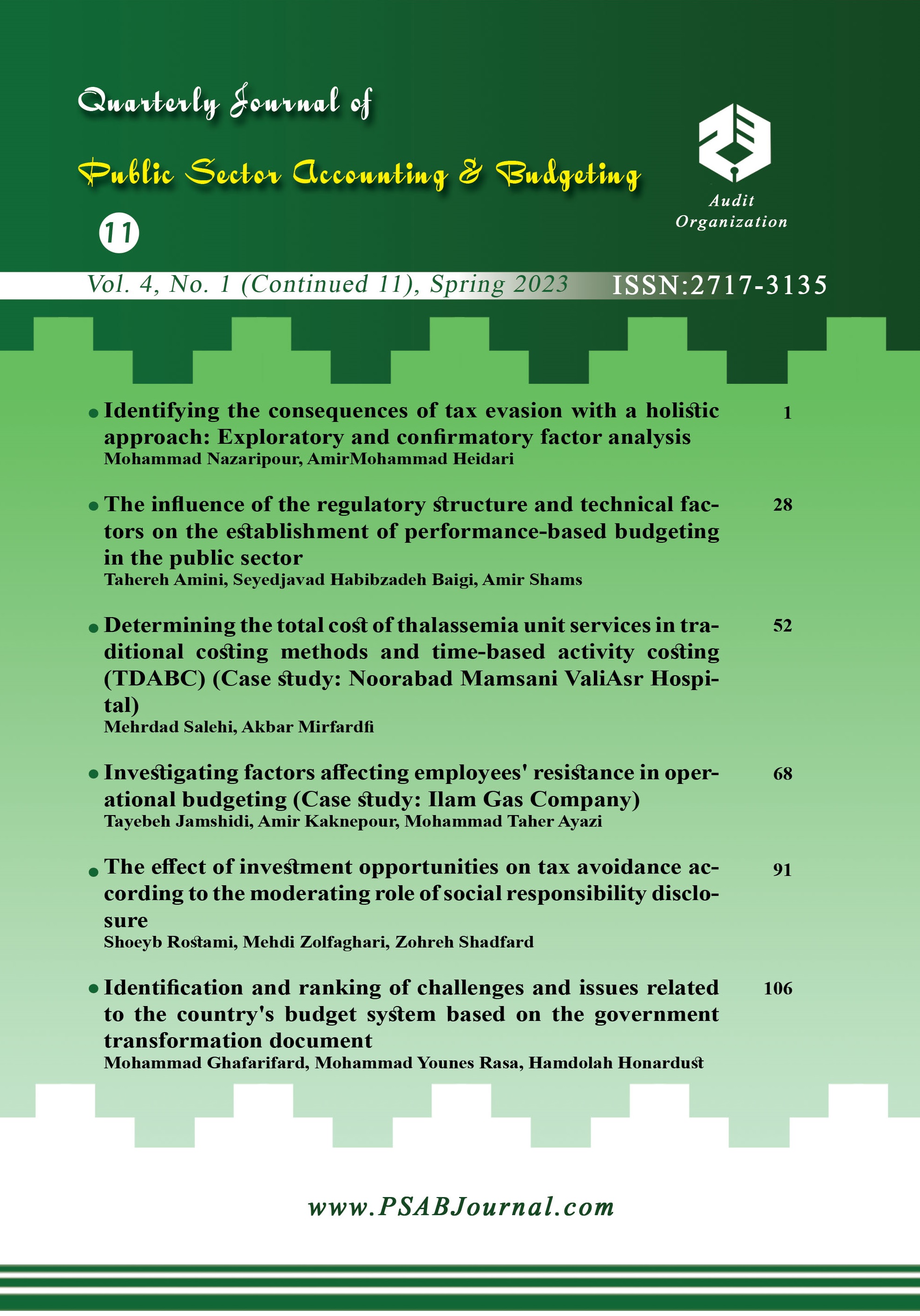
نقیها نجفآبادی، روحالله. (1403). بررسی جامع تحقیقات مرتبط با هوش مصنوعی در حسابداری، مالیات، مدیریت مالی و مسیر پیشرو. چشمانداز حسابداری و مدیریت، 7(97)، 1-10.
Aladebumoye, T. (2025). Integrating AI-driven tax technology into business strategy. International Journal of Research and Review, 12(1), 224–231. https://doi.org/10.52403/ijrr.20250128
Bankole, F., & Vara, Z. (2022). Artificial intelligence systems for value added tax collection via self organizing map (SOM).
Belahouaoui, R., & Alm, J. (2025). Tax fraud detection using artificial intelligence-based technologies: Trends and implications. Journal of Risk and Financial Management, 18(9), Article 502. https://doi.org/10.3390/jrfm18090502
Çek, K. (2024). The role of artificial intelligence technology adoption in enhancing audit and financial reporting quality within different governance environments. LAÜ Sosyal Bilimler Dergisi, 15(2), 157–180.
Eziefule, A. O., Adelakun, B. O., Okoye, I. N., & Attieku, J. S. (2022). The role of AI in automating routine accounting tasks: Efficiency gains and workforce implications. European Journal of Accounting, Auditing and Finance Research, 10(12), 109–134.
Garcia, A., & Adams, J. (2023). Data driven decision making: Leveraging analytics and AI for strategic advantage. Research Studies of Business, 1(02), 77–85.
Ibiyeye, T., & Ibiyeye, A. (2024). Analyzing economic impact of US trade policies and regulations on business growth using multivariate regression models. ICONIC Research and Engineering Journals, 8(5), 276–289.
Ibiyeye, T., & Olayinka, A. A. (2024). Shaping global economic prosperity: The role of policy driven and technology enhanced supply chains.
Ibiyeye, T. O., Iornenge, J. T., & Adegbite, A. (2024). Evaluating regulatory compliance in the finance and investment sector: An analysis of current practices, challenges, and the impact of emerging technologies. IOSR Journal of Economics and Finance (IOSR-JEF), 15(6), 1–8.
Idrus, M. (2024). Efficiency of tax administration and its influence on taxpayer compliance. Economics and Digital Business Review, 5(2), 889–913.
Mishra, S., & Tripathi, A. R. (2021). AI business model: An integrative business approach. Journal of Innovation and Entrepreneurship, 10(1), 18. https://doi.org/10.1186/s13731-021-00157-5
Munjeyi, E., & Schutte, D. (2025). Development of an artificial intelligence framework to combat tax noncompliance in Botswana. Acta Commercii, 25(1), 1379. https://doi.org/10.4102/ac.v25i1.1379
Mutzner, N., Oberhauser, V., Winter, F., & Rauhut, H. (2023). Evading the algorithm: Increased propensity for tax evasion and norm violations in human-computer interactions. Frontiers in Behavioral Economics, 2, 1227166. https://doi.org/10.3389/frbhe.2023.1227166
OECD. (2025). Governing with artificial intelligence: The state of play and way forward in core government functions. OECD Publishing. https://doi.org/10.1787/795de142-en
Onnasch, L. (2015). Crossing the boundaries of automation: Function allocation and reliability. International Journal of Human-Computer Studies, 76, 12–21. https://doi.org/10.1016/j.ijhcs.2014.12.006
Pangavhane, P., Kolse, S., Avhad, P., Gadekar, T., Darwante, N. K., & Chaudhari, S. V. (2023). Transforming finance through automation using AI-driven personal finance advisors. In Proceedings of the 4th International Conference on Computation, Automation and Knowledge Management (ICCAKM) (pp. 1–5). IEEE. https://doi.org/10.1109/ICCAKM58667.2023.00010
Patel, P. (2024). AI and machine learning in tax strategy: Predictive analytics for corporate tax optimization. African Journal of Artificial Intelligence and Sustainable Development, 4(1), 439–457.
Puspita, T. (2023). Tax planning in transition: Evaluating the impact of evolving legislation on financial strategies. Advances in Taxation Research, 1(3), 136–146.
Saba, C. S., & Monkam, N. (2024). Leveraging the potential of artificial intelligence (AI) in exploring the interplay among tax revenue, institutional quality, and economic growth in the G-7 countries. AI & Society, 40(2), 653-675. https://doi.org/10.1007/s00146-024-01887-y
Swenson, C. (2024). Using machine deep learning AI to improve forecasting of tax payments for corporations. Forecasting, 6(4), 968–984. https://doi.org/10.3390/forecast6040050
Zaqeeba, N .(2024). The Scope of AI Applications to Tax Evasion in Enhancing Tax Enforcement Capabilities. International Journal of Digital Accounting and Fitch Sustainability (IJDAFS), 1(2).
Zhang, C., Zhu, W., Dai, J., Wu, Y., & Chen, X. (2023). Ethical impact of artificial intelligence in managerial accounting. International Journal of Accounting Information Systems, 49, 100619. https://doi.org/10.1016/j.accinf.2023.100619